Home Ed Resource

The full list

Everything we’ve written up so far. Search it, or narrow it down by subject, age, cost or where you are.

32 things

iDEA

we last looked

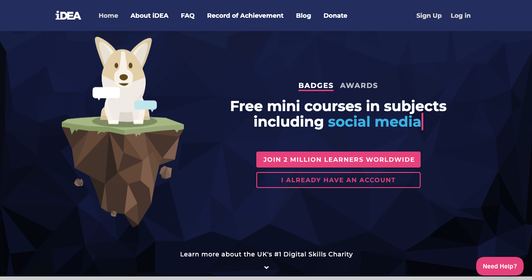
Little online modules about computers, money and work skills. You earn badges as you go, and they add up to a Bronze, Silver or Gold award. Handy if you like having something to show for the term.

iDEA stands for the Inspiring Digital Enterprise Award, and it describes itself as the digital and enterprise equivalent of the Duke of Edinburgh's Award. The modules are short and interactive, written with industry people, and they cover three broad strands: the digital side, including coding; enterprise; and the employability bits like work skills and money. There is no set order to any of it, so you can follow whatever your child is interested in this week and still be earning towards the same award.

Bronze came first in 2017, Silver followed in 2018 and Gold in 2022. Every badge you finish adds points towards the next level up. The site reports more than 2.6 million people signed up, over 19 million badges completed and 243,000 awards won — their figures, not ours. You can download a portable Record of Achievement as you go, which is the useful part if you want something on paper for a portfolio, a college application or just the end of a term.

It runs in a browser on any device, anywhere you can get online, so there is nothing to install and nothing to keep updated. It is free the whole way through, with no trial period and no paid tier waiting further in.
Free badging platform - iDEA

Do Revision

we last looked

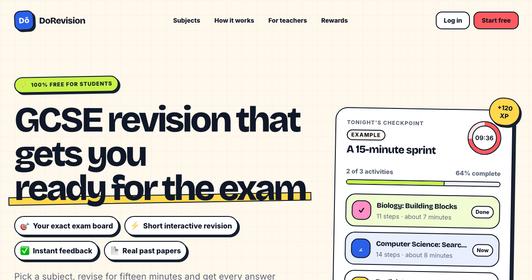
Revision questions and a plan for what to do next. The plan is the bit we found useful — without a school timetable, someone has to decide what gets revised today, and this does it for you.

It is built around GCSE specifications rather than subjects in general, which matters more than it sounds — the same subject is examined differently by different boards. Six are covered: AQA (37 subjects, 813 modules), Edexcel (37 subjects, 790 modules), OCR (32 subjects, 339 modules), CCEA (37 subjects, 253 modules), Eduqas (21 subjects, 130 modules) and WJEC (27 subjects, 89 modules). You choose the board once and the content follows it from there.

The work is broken into what they call revision sprints, around fifteen minutes each, mixing a little teaching with questions that are not all multiple choice: filling gaps, ordering steps, matching pairs, labelling diagrams, building sentences and annotating. Answers are checked on the server rather than sitting in the page, so they cannot be found by poking about in the source. On top of that there is XP, streaks, trophies and a leaderboard, which will either help or irritate depending entirely on the child.

Past papers are open without logging in. The revision modules and the progress tracking need an account, and that is still free — no card, no trial, no paywall further down. There are teacher-facing planning tools and printable sheets as well, and those are just as usable from a kitchen table as from a classroom.

Free GCSE revision platform

Oak National Academy

we last looked

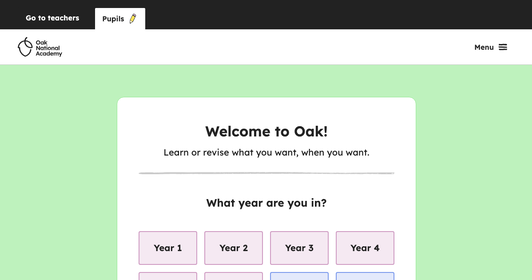
Free video lessons for every year from Year 1 to Year 11, sorted by year group so you can pick up wherever your child is. Useful when you want someone else to do the explaining for a bit.

Oak is the national curriculum body for England, and it says it's now used in 72% of schools. The pupil side is the bit for home: choose a year, then a subject, and work through lessons that follow the national curriculum. It's free, and you don't need an account to watch.

BBC Bitesize

we last looked

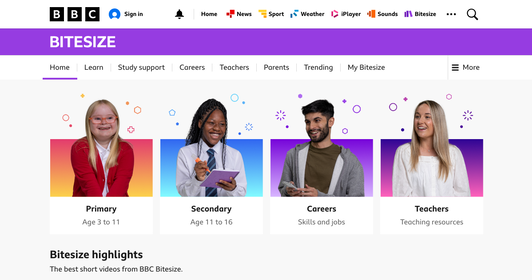
Short videos, guides, quizzes and games for nearly every subject, from age 3 up to GCSE. The one most people already know, and still a good first stop for a topic you're both rusty on.

It's split into Primary (ages 3 to 11) and Secondary (11 to 16), then by subject and topic, with step-by-step guides, videos, quizzes and games throughout. There's a Careers section for older ones too. All free, from the BBC.

Khan Academy

we last looked

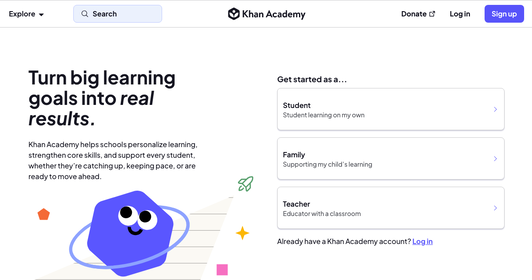
Free lessons and practice in maths, science, computing, history, economics and more. Best known for maths, where it walks through a topic step by step and then gives you questions until it sticks.

Khan Academy is a non-profit and everything on it is free; it runs on donations. It's American, so the maths courses follow US grades rather than UK years, but the skills are the same and you can jump straight to a topic. Families can set up free accounts to follow a child's progress.

Corbettmaths

we last looked

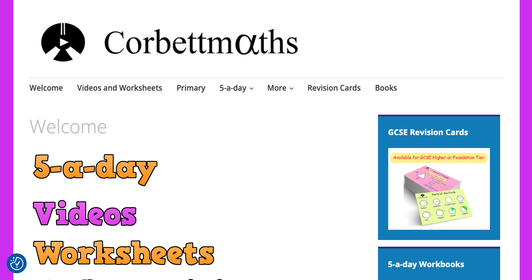
Thousands of free maths videos and worksheets, plus the 5-a-day: five short questions a day to keep things ticking over. Popular for GCSE, with primary resources too.

Everything is organised by topic, each with a video, practice questions and answers, and there are GCSE revision cards, 5-a-day workbooks and primary study cards on top. The site is free and carries adverts; some of the cards and workbooks are also sold in print.

Maths Genie

we last looked

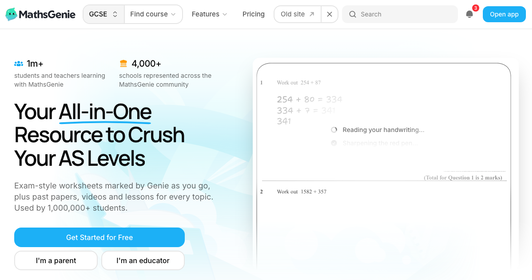
Free GCSE and A-level maths revision: a video and worksheet for every topic, sorted by grade, plus past papers and mark schemes. Handy for working out which grade a topic sits at.

Topics run from Grade 1 up to Grade 8/9, so it's easy to see what to tackle next. It can now mark exam-style answers for you, handwritten working included, and has a predicted-grade calculator. The site says more than a million students and teachers use it.

Math Antics

we last looked

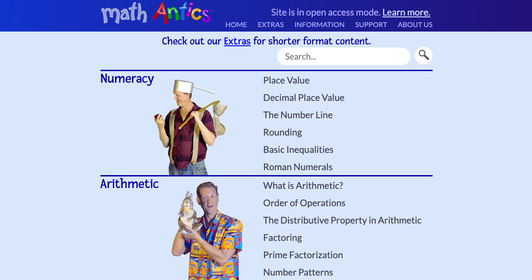
Short, clear videos on the basics: place value, long division, fractions, percentages, geometry and the like. Good for the moment a method just isn't clicking and a different explanation might.

It's American, so it says 'math', but the arithmetic is the same. Videos are grouped from numeracy and arithmetic through fractions, ratios and geometry, with worksheets alongside.

Teach Your Monster to Read

we last looked

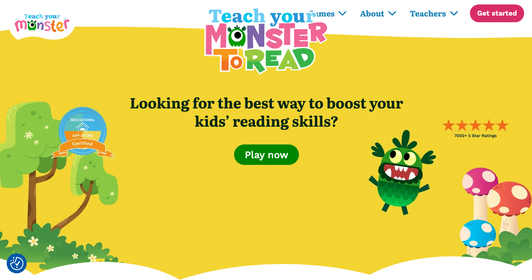
A phonics game where your child makes a monster and teaches it to read, from first letters and sounds up to whole sentences. Free on a computer.

It was made with literacy experts and comes in three stages: First Steps, Fun with Words and Champion Reader. The browser version is completely free; the phone and tablet apps cost a little. You can follow progress from an adult account.

Night Zookeeper

we last looked

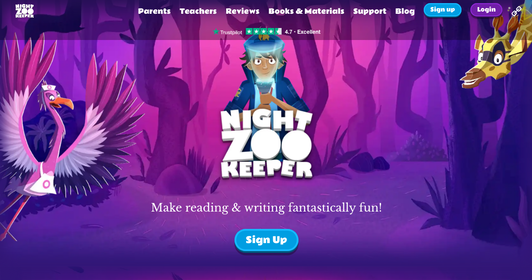
A reading and writing programme wrapped in a story: children invent characters and write their way through adventures to save the Night Zoo. Suits a child who'll write for a plot.

It's for ages 6 to 12 and covers spelling, punctuation, grammar and vocabulary through games and writing challenges. It's a paid subscription. There are free reading and writing worksheets on the site too, and a book series if the story catches on.

Explorify

we last looked

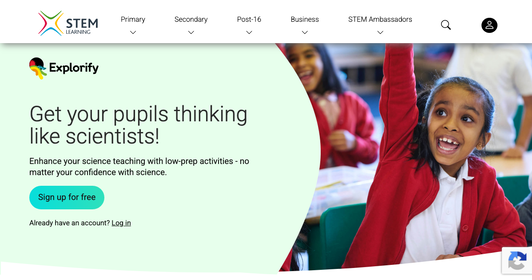
Short science activities built around a picture, a video or a question, designed to get children talking and thinking like scientists. Low prep, which is the point.

It's made for primary classrooms (the site says over 75% of UK primary schools use it), but the activities work just as well round a table at home. It's completely free; you sign up with an email to use it.

Science Sparks

we last looked

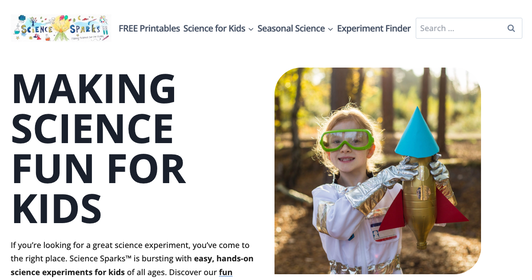
Hundreds of easy, hands-on science experiments, most using things you'll already have in the house, each with the science explained. Handy for a rainy afternoon.

Experiments are sorted into biology, chemistry, physics and preschool science, with STEM challenges, science facts and free printables as well. The site is free and carries adverts.

Scratch

we last looked

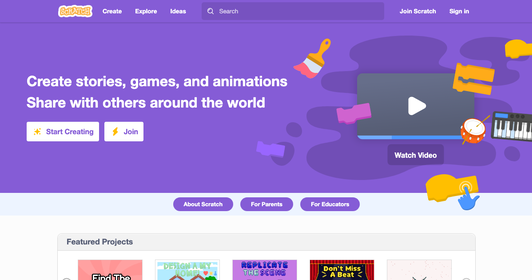
Drag-and-drop coding for making games, stories and animations, then sharing them with other Scratch users. Many people's first go at programming.

It's free and run by a non-profit that grew out of MIT. You can start creating in the browser straight away, or make an account to save and share projects. Shared projects are public, so it's worth looking at the community side together first.

TypingClub

we last looked

Touch typing, one short lesson at a time, repeated until you get five stars. The site reckons a few minutes a day for a week or two will do it.

It's web-based and free for individuals, with an optional paid edition for schools. You don't need an account, though making one saves your progress. There are more than 650 typing games, tests and videos, plus courses for other keyboard layouts and languages.

Big History Project

we last looked

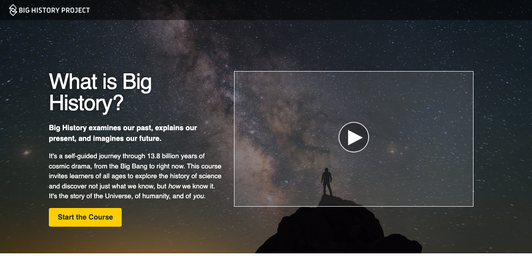
A free, self-guided course through 13.8 billion years, from the Big Bang to now. History and science as one story, for a child who likes the big picture.

It moves through the universe, the solar system and Earth, life on Earth, humanity and the modern world, with videos and articles along the way. It's written for lifelong learners; there's a separate classroom version, OER Project, for younger secondary students.

English Heritage teaching resources

we last looked

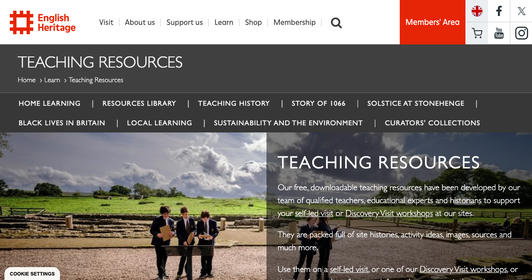
Free history resources from the people who look after Stonehenge, Dover Castle and hundreds of other places, sorted by period. Good before, or after, a day out.

The resources library runs from prehistory through the Romans, Anglo-Saxons and Normans, medieval, Tudors and Stuarts, and Victorians to the 20th century, with teachers' kits for individual sites. There's a section for booking educational visits if you're planning a trip.

School History

we last looked

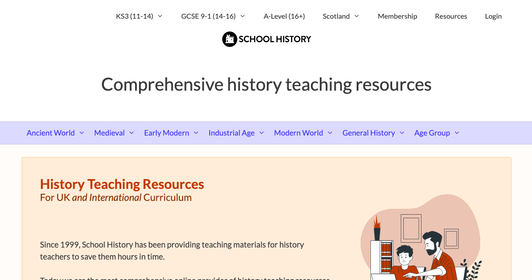
A big library of history lessons, worksheets and games for KS3, GCSE and A-level, organised by topic and by exam board. Written for teachers, which makes it a solid backbone if you're the one teaching history.

It's been going since 1999 and matches the main GCSE and IGCSE boards (AQA, Edexcel, OCR, CIE, WJEC and Eduqas), with Scottish (SQA) history too. It's a paid subscription, from £10 a month.

Seterra

we last looked

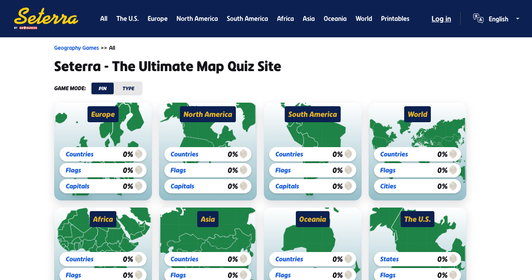
Map quizzes: countries, capitals, flags, rivers and mountains. Pick a continent and go. Oddly addictive, and a quick way to learn where things are.

There are more than 400 quizzes, which you can customise, in over 40 languages. It's been around since 1997 and is now part of GeoGuessr. The quizzes are free to play.

OS MapZone

we last looked

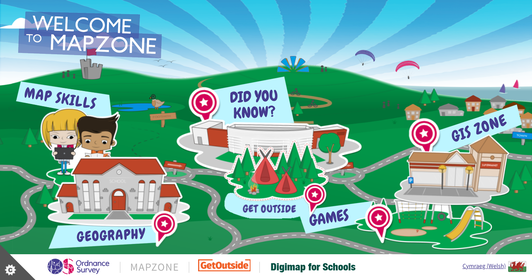
Ordnance Survey's site for children: map skills, grid references, symbols, quizzes and games. Worth a look before a walk with a paper map.

It's split into map skills, geography, 'did you know?', games, map quizzes and a GIS zone for older children. It's free, in English or Welsh.

Time for Geography

we last looked

Free, open-access geography videos for secondary students, linked to GCSE, IGCSE, A-level, National 5 and Higher. Useful alongside whatever course you're following.

It describes itself as a video platform connecting geography education and careers, and lists university open days for older students thinking about what comes next.